
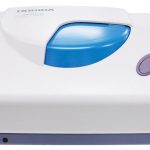
BIONOVA X | CELLINK
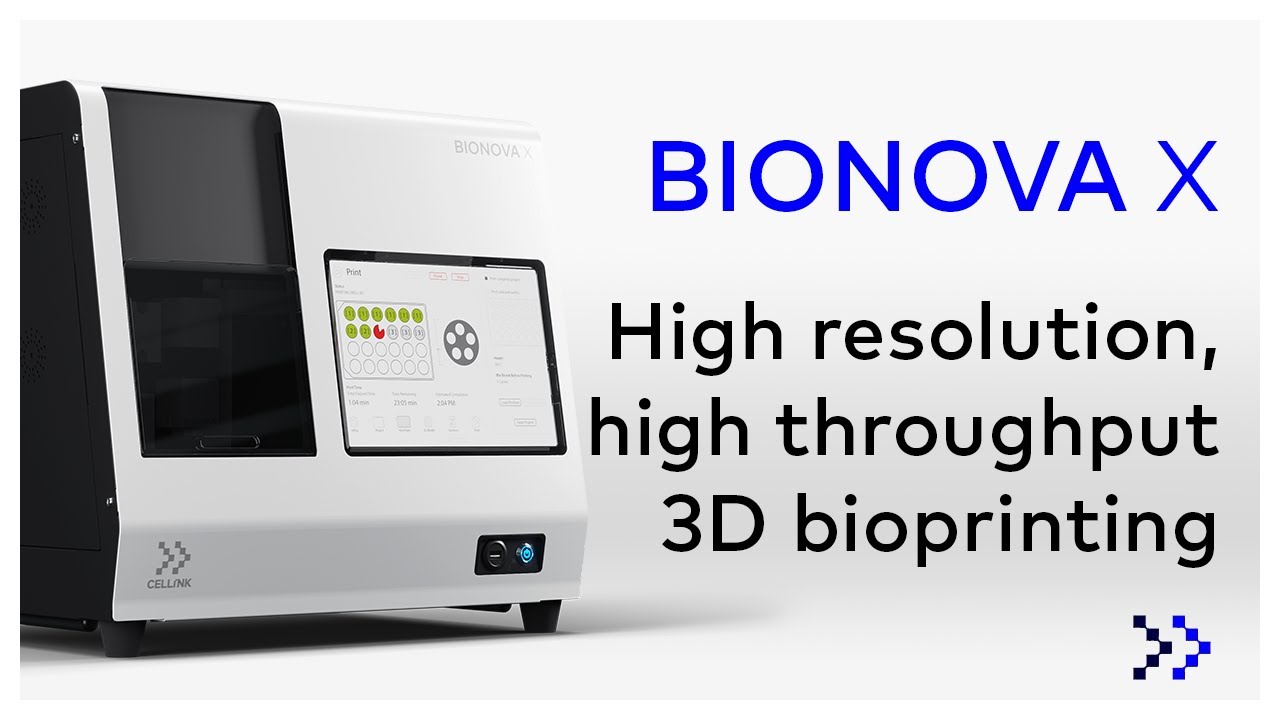
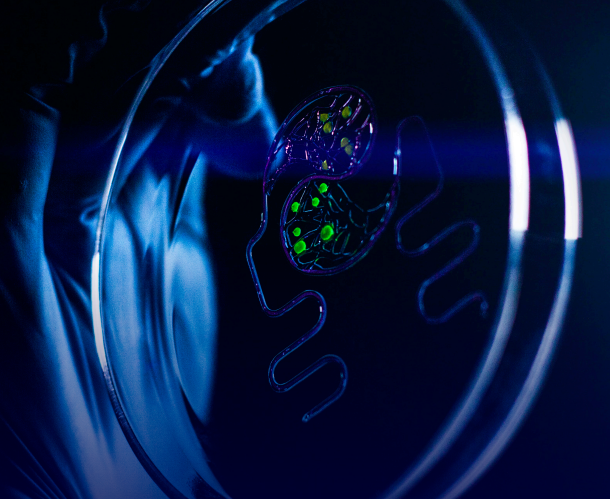
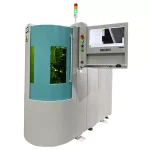
The CELLINK BIONOVA X is a direct in-well digital light processing bioprinter designed for high-resolution and high-throughput biofabrication. It prints directly inside standard multi-well plates, reducing transfers between fabrication and culture workflows and supporting faster progression from construct production to imaging, culture or assay analysis.
The system combines 10 µm XY printing resolution, 405 nm illumination and direct in-well layerless printing. Support for 6-, 12-, 24- and 96-well plates enables researchers to select larger individual constructs or higher replicate counts according to the experimental design.
Resources:
Key benefits
- 10 µm XY resolution: Supports fine microarchitectures, microwells, channels and detailed biomimetic geometries.
- Direct in-well printing: Constructs are fabricated inside the selected culture plate, simplifying downstream culture and analysis.
- High-throughput formats: Current manufacturer specifications support 6-, 12-, 24- and 96-well plates.
- Layerless DLP workflow: Continuous projection-based fabrication is designed for rapid print cycles.
- Multi-material capability: Multiple materials can be incorporated into advanced construct designs.
- Multi-stiffness gradients: Grayscale exposure enables spatial control of crosslinking and biomechanical properties with compatible formulations.
- Automated setup: Machine sensors manage alignment and focusing to reduce manual setup.
- Cell-friendly 405 nm source: The visible-light workflow is intended for compatible live-cell photoinks.
Direct in-well biofabrication
Direct in-well printing can reduce handling between fabrication and culture, improve registration with assay formats and simplify microscopy or plate-based analysis. It is particularly useful for generating repeated microarchitectures, disease models, organoid-support structures, vascular features and controlled extracellular-matrix environments.
The plate format changes the available build volume. Users should select the format according to construct size, replicate count, imaging method, culture volume and assay workflow.
Applications
- High-throughput 3D tissue and disease models
- Direct fabrication in multi-well plates
- Micropatterning and controlled cell microenvironments
- Spheroid and organoid culture structures
- Vascular and perfusable microarchitectures
- Multi-stiffness and multi-material tissue models
- Precision-medicine and drug-response studies
- Regenerative-medicine and tissue-engineering research
Technical specifications
| Parameter | Manufacturer specification |
| Bioprinting technology | direct in-well layerless printing using DLP-based technology |
| Instrument dimensions | 515 × 380 × 441 mm, L × W × H |
| Weight | 42 kg |
| Supported well plates | 96, 24, 12 and 6 wells; 48-well plates are not supported |
| Build volume, 96-well | Ø3 × 5 mm |
| Build volume, 24-well | Ø9 × 6 mm |
| Build volume, 12-well | 9 × 9 × 9 mm |
| Build volume, 6-well | 19 × 10 × 9 mm |
| XY printing resolution | 10 µm |
| Motor-driven Z precision | 4 µm |
| LED wavelength | 405 nm, FWHM ±7.5 nm |
| Intensity range | 4–16 mW/cm² |
| Heater temperature | room temperature to 60 °C |
| UV sterilisation | UV-C, 270 ±10 nm |
| User interface | integrated display |
| Display | 10-inch glove-friendly touchscreen |
| Supported files | .stl, .png, .bmp, .jpg |
| Connectivity | USB-A |
| Power | 100–240 VAC, 50–60 Hz, 200 W |
BIONOVA X or LUMEN X Gen 3?
Choose BIONOVA X when the project requires direct fabrication in standard well plates, 10 µm XY resolution, multiple replicates or advanced in-well tissue-model workflows. Choose LUMEN X Gen 3 when a modular benchtop DLP platform, 68 × 38 × 100 mm build volume, layer-by-layer fabrication or flexible build platforms are more important.
Neither system is universally superior. The correct choice depends on resolution, build volume, plate format, material chemistry, exposure strategy, throughput and downstream assay workflow.
Frequently asked questions
Which well plates are supported by BIONOVA X?
The current CELLINK specification supports 6-, 12-, 24- and 96-well plates. The manufacturer explicitly states that 48-well plates are not supported.
What does direct in-well printing change?
The construct is fabricated in the plate used for culture or analysis. This can reduce transfers, simplify plate-based workflows and enable higher replicate counts.
Can BIONOVA X create stiffness gradients?
Yes, with compatible photoinks and a calibrated grayscale exposure process. Varying local exposure can tune crosslinking and generate biomechanical gradients.
Request a configuration
For system selection, specify the desired plate format, number of replicates, target feature size, construct height, photoink chemistry, cell type and downstream imaging or assay method. Contact APEL Laser or email sales@apellaser.ro.
| Manufacturer | CELLINK |
|---|---|
| Applications / Industries | Biology, Bioprinting of tissues for the study of diseases, Biotechnology, Drug testing and personalized therapy, Pharmaceutical Industry |
| Pixel resolution (XY) | 10 μm |