


Blog
How to Choose an Indoor Air Quality Monitor: A Selection Guide

Indoor air quality cannot be assessed reliably from the impression that a room feels “well aired”. Carbon dioxide can indicate insufficient ventilation relative to occupancy, particles may enter from outdoors or be generated by indoor activities, and volatile organic compounds can vary with furniture, materials, cleaning products and processes taking place inside the building.
The selection of an indoor air quality monitor should therefore begin with a practical question: what decision should the data support? Some projects only require distributed CO₂ monitoring across many rooms. Others need a broader picture of indoor comfort or a professional configuration adapted to specific pollutants.
The Ecomesure range available through APEL Laser covers these requirements through three complementary solutions: EcomNano, EcomLite 2 and EcomZen 2.
Which parameters are worth monitoring indoors?
Not every project needs every available sensor. Parameters should be selected according to the likely sources, the type of building and the actions that can be taken.
CO₂: a practical ventilation indicator
In occupied spaces, CO₂ concentration helps assess the relationship between occupancy and the supply of fresh air. Repeated increases during lessons, meetings or events can show that the ventilation strategy needs to be adjusted.
CO₂ does not, however, describe indoor air quality in full. An acceptable CO₂ concentration does not rule out the presence of particles, volatile organic compounds, formaldehyde or carbon monoxide.
PM₁, PM₂.₅ and PM₁₀ particles
Particles may enter from outdoors through windows, doors or the ventilation system, but they may also be generated by indoor activities. Continuous monitoring helps identify when concentrations rise, compare rooms and assess the effect of measures such as changing ventilation settings or improving filtration.
VOCs and formaldehyde
Volatile organic compounds may be associated with furniture, construction materials, paints, adhesives, cleaning products and certain professional activities. Formaldehyde, or HCHO, is particularly relevant in new buildings, refurbished spaces and rooms with new furniture.
The data must be interpreted correctly. A MOX-type VOC sensor primarily indicates changes in the overall volatile-compound load, while a PID sensor measures ionisable compounds within a defined range. These measurements do not automatically identify every chemical compound. Selective identification or legal confirmation may require a dedicated analytical method.
CO and comfort parameters
Carbon monoxide is relevant where combustion sources are present or where flue gases may enter the building. Temperature, humidity, pressure, noise and brightness complete the picture of the indoor environment and can help explain why a space feels uncomfortable even when the main pollutant readings are stable.
EcomNano, EcomLite 2 or EcomZen 2?
| Solution | Primary role | Representative parameters | When it is the right choice |
| EcomNano | Distributed monitoring of ventilation and VOC changes | CO₂, VOC index, temperature, humidity | Many classrooms, offices or rooms where quick installation, autonomy and a simple local indication are the priorities |
| EcomLite 2 | A comprehensive, standardised view of indoor air quality and comfort | CO₂, VOC, CO, HCHO, PM₁/PM₂.₅/PM₁₀, temperature, humidity, pressure, noise, brightness | Offices, schools, hotels, commercial and public buildings that need multiparameter monitoring without a custom sensor configuration |
| EcomZen 2 | Configurable professional monitoring | Optical, NDIR, PID and electrochemical sensors selected for the project; particles, CO₂, VOCs and specific gases | EHS projects, complex buildings, investigations, hospitals, airports or spaces where sources and pollutants must be addressed individually |
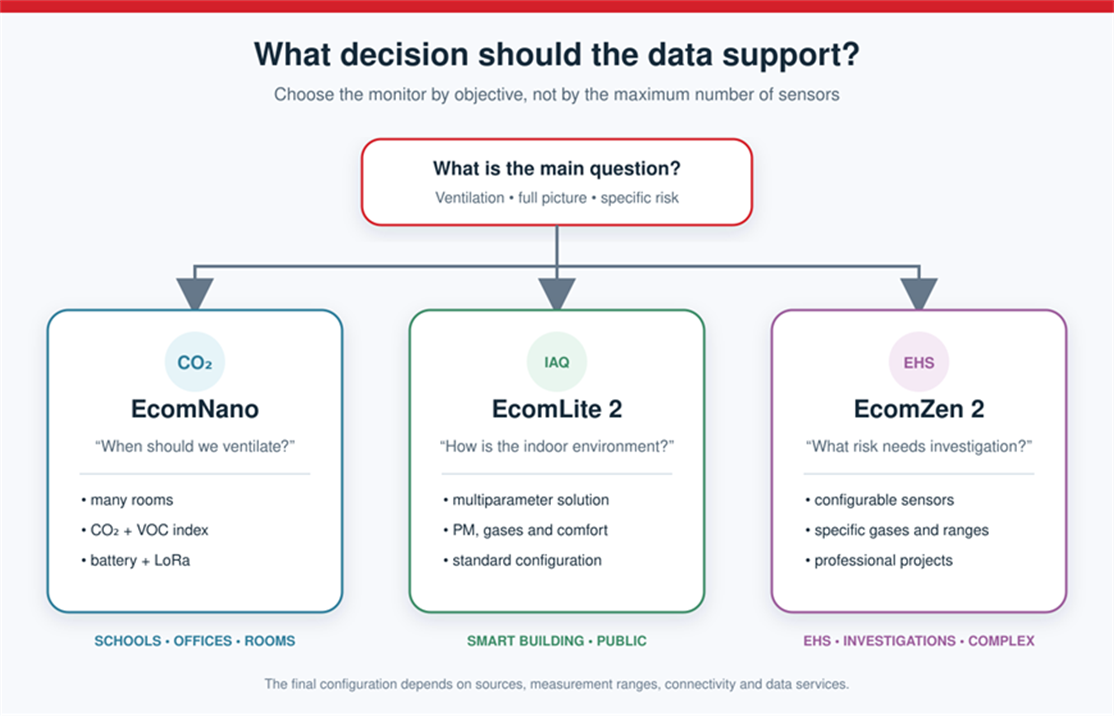
Figure 1. Monitor selection begins with the question the data must answer.
Choose EcomNano when the main question is “when should we ventilate?”
EcomNano focuses on CO₂ and changes in VOC levels. Its multicolour LED can give occupants a straightforward local indication, while LoRa connectivity and battery power support a distributed network with minimal changes to the building.
It is particularly suitable when:
- a large number of rooms must be covered;
- CO₂ is the main operational indicator;
- a simple ventilation rule is required;
- installation without permanent mains power is advantageous;
- data from several rooms must be centralised.
EcomNano is not the appropriate choice if the project requires particle, carbon monoxide or formaldehyde measurements. EcomLite 2 or an EcomZen 2 configuration provides a broader picture in these cases.
Choose EcomLite 2 for a comprehensive view of the indoor environment
EcomLite 2 is the balanced choice for most smart-building and indoor-environmental-quality projects. It monitors the main indoor pollutants and comfort parameters simultaneously, while the integrated LED makes the general air-quality status visible to occupants.
It is suitable for:
- private offices, meeting rooms and open-plan workspaces;
- schools, universities and libraries;
- hotels, restaurants and shopping centres;
- healthcare and care facilities for general environmental monitoring;
- building assessments before and after refurbishment;
- sustainability strategies and projects pursuing WELL, BREEAM, LEED or HQE certification.
EcomLite 2 is a standardised solution. When a project requires sensors for specific gases or particular concentration ranges, EcomZen 2 provides greater flexibility.
Choose EcomZen 2 when the project starts from a specific source or risk
EcomZen 2 is the configurable platform for professional projects. Depending on the objective, it can integrate electrochemical, PID, NDIR and optical sensors alongside comfort parameters.
This flexibility is particularly important for:
- Environment, Health and Safety projects;
- spaces adjacent to laboratories or technical processes;
- buildings with known sources or suspected pollutants;
- investigations following refurbishment or occupant complaints;
- hospitals, railway stations, airports and other complex-use buildings;
- projects that require connectivity, local storage and data integration adapted to the existing infrastructure.
The configuration should not follow a “maximum number of sensors” principle. It should be based on the sources, measurement ranges and decisions that the project needs to support.
Selection examples by building type
Schools and universities
For a network installed in every classroom, EcomNano provides a simple way to monitor CO₂ and signal when ventilation is needed. The data can reveal differences between rooms, lesson periods and occupancy patterns.
If the objective also includes particles, formaldehyde, carbon monoxide, acoustic comfort or thermal comfort, EcomLite 2 is more appropriate. EcomZen 2 becomes relevant when a specific investigation is required or the building has unusual sources.
The experience presented by Ecomesure for schools demonstrates the usefulness of CO₂ as an indicator of air exchange, while also showing how monitoring can support occupant awareness and straightforward corrective actions.
Offices and smart buildings
In an office building, EcomLite 2 is generally the starting point. It allows air-quality data to be correlated with temperature, humidity, noise and occupancy. The building manager can therefore identify not only an exceeded threshold, but also a recurring pattern linked to a room, a time interval or a ventilation setting.
For large-scale deployments where ventilation is the priority, EcomNano can reduce complexity. For technical areas, refurbished spaces or EHS investigations, EcomZen 2 can complement the network with a configured measurement system.
Hotels, restaurants and public spaces
Occupancy changes quickly in these locations and the range of indoor sources is broad. EcomLite 2 provides a multiparameter view for areas such as conference rooms, reception areas, restaurants and leisure spaces. In an extended deployment, EcomNano can be used in rooms where ventilation control is the primary objective, while EcomZen 2 can cover areas requiring a specialist assessment.
How should an indoor monitoring network be designed?
1. Define the decision before selecting the sensor
A good project begins with a list of questions:
- do we need to know when a room should be ventilated?
- do we need to compare areas within a building?
- are we assessing the effect of refurbishment or a filter change?
- have occupants reported discomfort or symptoms?
- is there a source or pollutant that needs to be investigated?
- must the data be integrated into a BMS, dashboard or proprietary system?
The answers determine the parameters, number of monitoring points, connectivity and required level of configuration.
2. Select representative locations
The monitor should be placed in an area representative of the air occupants breathe, without being directly influenced by an open window, a ventilation outlet, a heat source or an accidental local source. In a large building, one station cannot automatically represent every room.
3. Look for patterns, not only isolated values
A single peak may have a local explanation. A trend that repeats at the same time, a persistent difference between rooms or a change that appears after an intervention is usually more useful for decision-making.
4. Link every alert to an action
An alert is only valuable if it triggers a procedure: airing the room, checking the HVAC system, changing occupancy, controlling a source, checking filtration or starting an investigation. Thresholds should be defined according to the project requirements and applicable rules, rather than copied without context.
5. Plan maintenance and data verification
Sensors require a maintenance and verification strategy and, where applicable, calibration or sensor-cartridge replacement. For high-stakes projects, initial comparison with a reference instrument or a period of co-location can improve confidence in the interpretation.
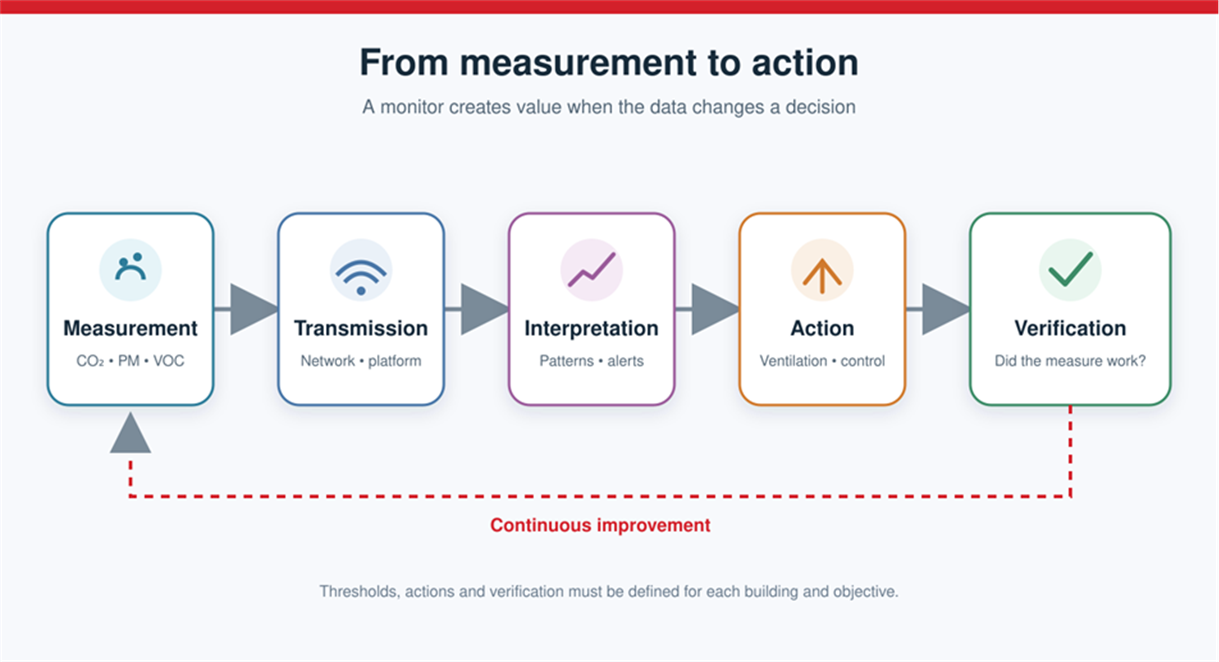
Figure 2. Data becomes useful when each alert leads to an action and the result is verified.
From measurement to action
EcomNano, EcomLite 2 and EcomZen 2 can transmit data to the secure Ecomesure platform for visualisation, alerts, analysis and export, depending on the selected configuration and services. The value of such a platform is that it turns a collection of sensors into a system: users can compare rooms and time periods, follow device status and document the effect of corrective measures.
In a smart-building project, monitoring can be linked to the ventilation strategy and building data. In a school, a local indicator can support an immediate action, while centralised data helps the administration identify recurring issues.
Frequently asked questions
Is CO₂ monitoring alone sufficient?
Yes, if the objective is strictly to assess ventilation relative to occupancy. No, if a broader air-quality assessment is required, because CO₂ does not directly indicate particles, formaldehyde, carbon monoxide or all volatile organic compounds.
Does a VOC sensor identify the substances in the air?
Not automatically. EcomNano provides an index that highlights VOC changes, while MOX and PID sensors have specific responses and measurement ranges. Identifying an individual compound may require selective laboratory analysis or a dedicated analyser.
Can the same monitor be used in every room?
Sometimes, but this is not always the most effective solution. A network can combine EcomNano in rooms where CO₂ is the priority, EcomLite 2 in representative areas and EcomZen 2 in spaces with specialist requirements.
Can the systems generate alerts and reports?
Yes. Data can be centralised in the Ecomesure platform. Visualisation, alerting, reporting, export and integration functions depend on the selected configuration and services.
What is the first step in configuring a project?
Prepare information about the building type, the number and use of rooms, the parameters of interest, suspected sources, available power and connectivity, and how the data will be used. This information forms the basis of the technical configuration.
Which solution is right for your project?
Whether you need distributed CO₂ monitoring, a comprehensive indoor-comfort assessment or a professional configuration adapted to a specific risk, the APEL Laser team can help define the parameters, monitoring locations, connectivity and data services.
Contact APEL Laser or write to sales@apellaser.ro, including the building type, number of rooms, parameters to be monitored and the objective of the project.

